
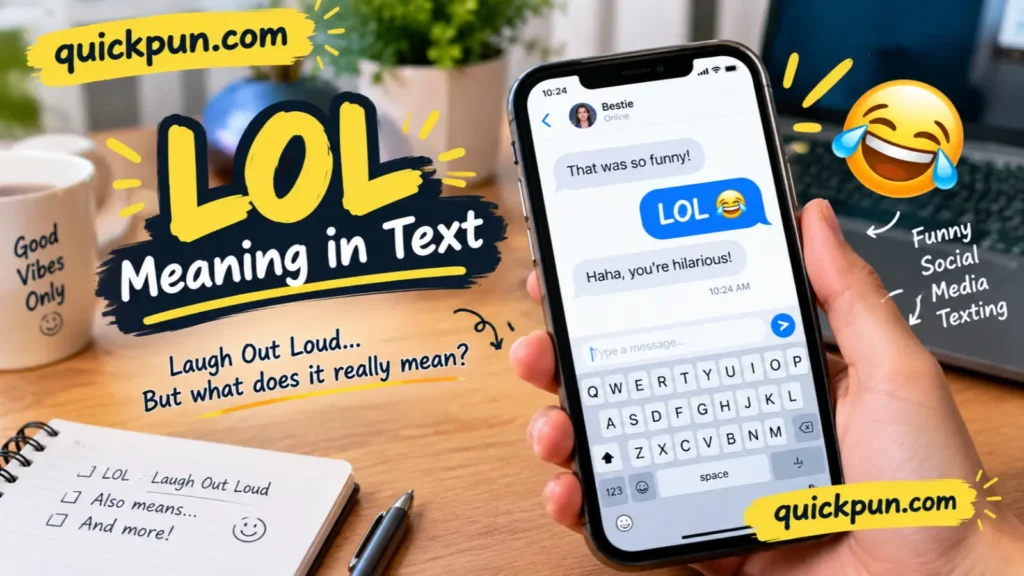
Imagine you are texting a friend about something embarrassing that happened during your day. You send a long message expecting a funny reaction. A few seconds later, your friend replies, “LOL 😂”.
You might smile because they understood the joke.
But then you may wonder: Does LOL really mean they are laughing, or are they just replying to be polite?
That is where the LOL meaning in text can get interesting.
The abbreviation is one of the oldest and most common pieces of internet slang, but its meaning can change depending on the conversation, relationship, and tone.
In most cases, LOL means “laughing out loud.” People use it to show that something is funny, lighten a message, or make their response feel more casual.
Quick Answer
LOL means “laughing out loud” in text messages and online conversations. It is usually used to show that something is funny or amusing.
People commonly use LOL:
- 😂 To react to something funny
- 😄 To make a message sound friendly
- 💬 To keep a conversation casual
- 😅 To soften an awkward or embarrassing statement
- 🙃 Sometimes to show mild amusement rather than actual laughter
- 🤣 Along with other laughing emojis when something is very funny
The exact LOL slang meaning depends on the situation. A simple “LOL” can be genuine laughter, while “lol okay” may sound dry or slightly annoyed.
What Does LOL Mean in Text?
LOL stands for “Laughing Out Loud.” It is a popular internet abbreviation used in texting, social media, online chats, gaming, and comments.
When someone writes “LOL,” they usually want to show that they found something funny.
For example:
You: “I walked into the wrong classroom today.”
Friend: “LOL 😂”
Here, LOL simply means that your friend thinks the situation is funny.
Another example:
You: “I just spilled coffee on my shirt before work.”
Friend: “lol that is so you 😭”
In this case, “lol” adds a playful and friendly feeling to the message.
A third example:
You: “Guess what? I forgot my own password again.”
Friend: “LOL seriously?”
Here, LOL shows surprise and amusement at the same time.
One important thing to understand is that people do not always literally laugh out loud when they type LOL. Sometimes it simply means “that’s funny,” “I’m amused,” or “I’m reacting casually.”
Where Is LOL Commonly Used?
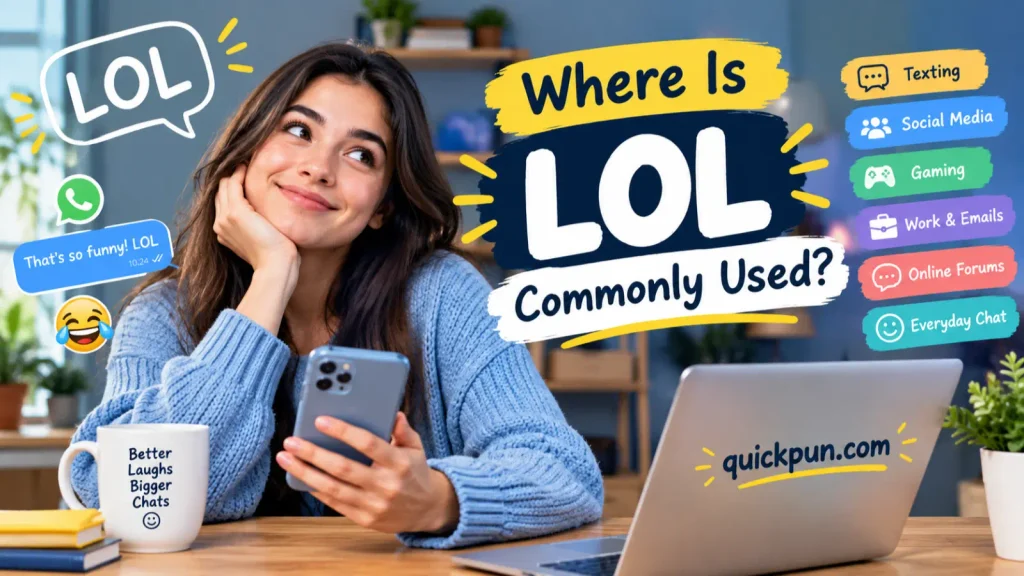
LOL is extremely common across different online platforms. You can see it in private conversations, public comments, gaming chats, and social media posts.
Text Messages
In regular SMS or messaging conversations, LOL is often used between friends, family members, classmates, or coworkers who have a casual relationship.
Example:
“You really forgot your keys again lol.”
The lowercase “lol” can make the sentence feel more relaxed.
On WhatsApp, people often use LOL with emojis, GIFs, stickers, or other slang.
Example:
“Bro I just saw your old photo 😂 lol”
Here, LOL adds extra humor to the conversation.
Snapchat
Snapchat conversations are usually casual, so LOL fits naturally.
Someone might send:
“You actually posted that? LOL 😭”
Depending on the relationship, this could be playful teasing rather than serious criticism.
LOL is common in Instagram comments and direct messages.
For example:
“LOL this is exactly what happened to me 😂”
It can also appear in replies to memes, reels, and funny posts.
TikTok
TikTok comments frequently use LOL to react to funny or unexpected videos.
Examples include:
“LOL I wasn’t expecting that.”
“This ending got me lol.”
In this setting, LOL often means something similar to “that was funny.”
Gaming / Discord
Gamers use LOL constantly during matches and voice-chat conversations.
For example:
“LOL you missed that shot.”
“LOL we actually won.”
It can be used for friendly teasing, excitement, or reacting to something unexpected.
Tone and Meaning Explained
The meaning of LOL can change depending on capitalization, punctuation, emojis, and the surrounding words.
Friendly Tone 😊
A friendly LOL usually shows genuine amusement.
Example:
“LOL you always make me laugh 😂”
This is clearly positive. The person is enjoying the conversation.
Another example:
“LOL that’s actually hilarious.”
Here, LOL reinforces the humor.
Neutral Tone 😄
Sometimes LOL is simply a casual reaction.
Example:
“LOL yeah, I remember that.”
The person may not be laughing hard. They are simply keeping the conversation light.
In many modern conversations, “lol” has become so common that it can work almost like a casual conversational filler.
Rude or Cold Tone 😐
LOL can sometimes sound cold or dismissive when used alone or with certain words.
For example:
“LOL okay.”
Depending on the conversation, this might mean:
- “Okay, whatever.”
- “I don’t really agree.”
- “That’s funny, I guess.”
- “I’m not taking this seriously.”
The relationship between the people matters a lot. The same words can feel playful between close friends but rude during an argument.
Examples of LOL in Conversation
Here are several realistic examples showing how LOL can work in different situations.
Example 1: Something Funny
Alex: “I tried cooking dinner and somehow burned the water.”
Sam: “LOL how do you even burn water? 😂”
Here, LOL clearly expresses amusement.
Example 2: Friendly Teasing
Alex: “I forgot my wallet again.”
Sam: “LOL you’re impossible.”
The LOL makes the teasing sound playful rather than harsh.
Example 3: Embarrassing Moment
Alex: “I waved at someone who wasn’t waving at me 😭”
Friend: “LOL I’ve done that too.”
Here, LOL shows shared amusement.
Example 4: Casual Reaction
You: “I finally finished the assignment.”
Friend: “LOL took you long enough.”
The person is teasing you while keeping the tone casual.
Example 5: Surprise
You: “He showed up wearing the exact same outfit as me.”
Friend: “LOL no way!”
LOL shows surprise and amusement.
Example 6: Awkward Situation
You: “I accidentally sent the message to my boss instead of you.”
Friend: “LOL 😭 you’re in trouble.”
The LOL helps express nervous amusement.
Example 7: Dry Response
You: “I spent three hours explaining everything.”
Them: “lol okay.”
This one is different. Without more context, the reply could feel dismissive or uninterested.
LOL Meaning From a Girl
When a girl uses LOL in a text, it usually means the same basic thing: “laughing out loud” or “that’s funny.”
However, the emotional meaning can depend on the situation.
If she says:
“LOL you are so funny 😂”
she is probably genuinely enjoying the conversation.
If she says:
“lol stoppp 😭”
she may be playfully embarrassed or amused.
If she responds:
“lol okay”
the meaning is less obvious. She could be joking, confused, uninterested, or slightly annoyed.
It is important not to assume that LOL automatically means she likes you or is flirting. Look at the whole conversation, not just one abbreviation.
For example:
You: “I bet I can make you laugh.”
Her: “LOL try me 😂”
That sounds playful and open to continuing the conversation.
But:
You: “Do you want to talk later?”
Her: “lol idk”
could suggest uncertainty or a lack of interest.
So when looking at the LOL meaning from a girl, context matters more than the abbreviation itself.
LOL Meaning From a Guy
A guy using LOL usually means “laughing out loud,” “that’s funny,” or “I’m amused.”
For example:
“LOL bro that’s crazy.”
This is generally a casual reaction.
A guy may also use LOL when teasing a friend:
“LOL you really thought that would work?”
In some conversations, guys use LOL to make a statement feel less serious.
For example:
“You’re actually annoying lol.”
The LOL can soften the statement and make it sound more playful.
However, it can also be used sarcastically:
“LOL sure bro.”
That might mean the person does not believe what was said.
So the LOL meaning from a guy is not automatically different from its meaning from a girl. The surrounding words and tone are much more important.
Is LOL Ever Rude or Offensive?
LOL itself is not normally rude or offensive. It is one of the most common casual expressions online.
However, the way it is used can change how a message feels.
When LOL Feels Dry
A one-word response can sometimes feel uninterested.
You: “I had such a terrible day today.”
Them: “lol”
If you were sharing something serious, this response could feel insensitive.
When LOL Feels Passive-Aggressive
Consider:
“LOL okay, if you say so.”
This may not be genuine laughter. It can suggest disagreement or sarcasm.
Another example:
“LOL you actually believe that?”
Here, LOL may make the message sound mocking.
When LOL Feels Polite
Sometimes people use LOL to soften an awkward statement.
“I completely forgot about our meeting lol.”
The LOL makes the apology or admission feel less stiff.
Still, it does not replace a proper apology when the situation is serious.
When to Use and When NOT to Use
| When to Use ✅ | When NOT to Use ❌ |
|---|---|
| When reacting to a funny joke | During a serious emotional conversation |
| When teasing a close friend | When someone is sharing bad news |
| In casual text messages | In formal business writing |
| In social media comments | In professional documents |
| To make a message lighter | When your message could sound dismissive |
| When chatting with people who understand your style | When speaking to someone who dislikes slang |
For example, saying “LOL that was hilarious” to a friend is perfectly normal.
But replying “LOL” to someone telling you about a serious personal problem can come across as insensitive.
Always consider the emotional situation before using slang.
LOL Meaning in Chat vs Social Media
The LOL meaning in chat is usually straightforward: it signals amusement or a casual reaction.
In a private conversation, people may use LOL to make their messages sound more natural.
Example:
“LOL I can’t believe you did that.”
On social media, LOL can work more like a public reaction.
For example:
“LOL this video is too accurate.”
There is also a difference between uppercase LOL and lowercase lol.
LOL 😂 may feel more energetic or expressive.
lol can feel softer, more casual, or more conversational.
For example:
“lol that’s true”
sounds different from:
“LOL THAT’S CRAZY 😂”
Neither is automatically better. The choice depends on the person’s texting style.
Similar Slang Words or Alternatives
If you want to express laughter or amusement without using LOL, there are many alternatives.
| Word | Meaning | Usage |
|---|---|---|
| LMAO | Laughing very hard | Very casual |
| LMFAO | Stronger version of LMAO | Very casual and expressive |
| ROFL | Rolling on the floor laughing | Used for something extremely funny |
| Haha | Shows laughter | Casual and common |
| Haha 😂 | Friendly laughter | Texting and social media |
| 😂 | Laughing reaction | Quick response |
| 🤣 | Strong laughter | Very funny situations |
| OMG | Oh my God | Surprise or excitement |
| Hehe | Soft or playful laugh | Friendly/flirty contexts |
| I’m dead | Something is extremely funny | Modern internet slang |
The best choice depends on how strongly you want to express your reaction.
For example, “haha” can feel softer than “LMAO,” while “🤣” can show stronger laughter without typing any words.
Other Meanings of LOL
The most common meaning of LOL in texting is “laughing out loud.”
However, LOL can have other meanings in different contexts.
Lots of Love
In some older messages, LOL has been used to mean “lots of love.”
This meaning is much less common in modern internet slang, especially among younger users.
Because of that, context is extremely important.
Little Old Lady
In some non-internet contexts, LOL may be used as an abbreviation for “little old lady.”
This is not normally what someone means when they type LOL after a joke.
So if you see:
“LOL 😂”
the intended meaning is almost certainly “laughing out loud.”
Why Do People Use LOL?
There are several reasons LOL has remained popular for so long.
Fast Typing ⌨️
Typing three letters is much faster than writing:
“That made me laugh.”
LOL quickly communicates the reaction.
Internet Culture 🌐
LOL became deeply connected with online communication and internet culture.
As texting and social media grew, short abbreviations became an easy way to express emotions.
Convenience
People often want to respond quickly without writing a complete sentence.
Instead of:
“That was really funny.”
they can simply type:
“LOL 😂”
Making Messages Feel Less Serious
LOL can also change the emotional feel of a sentence.
Compare:
“You forgot again.”
with:
“You forgot again lol.”
The second version can feel more playful and less confrontational.
Showing Emotional Reaction
Text messages do not include facial expressions or voice tone. LOL helps fill that gap.
It tells the other person that the message is meant to be humorous or lighthearted.
FAQs:
What does LOL mean in text?
LOL usually means “laughing out loud.” People use it when something is funny, amusing, surprising, or playful. It is common in texting, WhatsApp, Snapchat, Instagram, TikTok, gaming, and other online conversations.
What does LOL mean in chat?
The LOL meaning in chat is generally “laughing out loud.” However, it can also simply mean “that’s funny” or act as a casual reaction. The exact tone depends on the surrounding conversation.
Does LOL mean someone is actually laughing?
Not always. Someone may type LOL without physically laughing. In modern texting, LOL can simply show amusement or make a message feel more casual.
What does LOL mean from a girl?
When a girl says LOL, she is usually showing amusement or reacting casually. It does not automatically mean she is flirting or interested in you. You need to consider her other messages and the overall context.
What does LOL mean from a guy?
A guy usually uses LOL to show that something is funny or to make a conversation more relaxed. It can also be used for teasing or sarcasm depending on the words around it.
Is LOL rude?
LOL is not normally rude. However, replying with only “lol” during a serious conversation can sometimes feel dismissive or insensitive. Tone and context determine how the message is received.
Final Thoughts:
The LOL meaning in text is simple most of the time: “laughing out loud.” 😂
But like many pieces of texting slang, LOL can carry different feelings depending on the situation. It can show genuine laughter, friendly teasing, casual amusement, surprise, or even sarcasm.
If someone sends you “LOL 😂”, they are probably reacting positively to something funny. But if they reply with “lol okay” during an argument, the meaning may be very different.
The best way to understand LOL is to look beyond the three letters and pay attention to the words, emojis, relationship, and overall tone of the conversation.

Peter Hemsworth is the mind behind QuickPun.com, where everyday words, slang, and internet expressions reveal their hidden stories. With a passion for uncovering what people really mean, he turns simple terms into fascinating reads that keep curious minds coming back for more. Dive in—you might discover there’s far more behind a word than you ever imagined.