
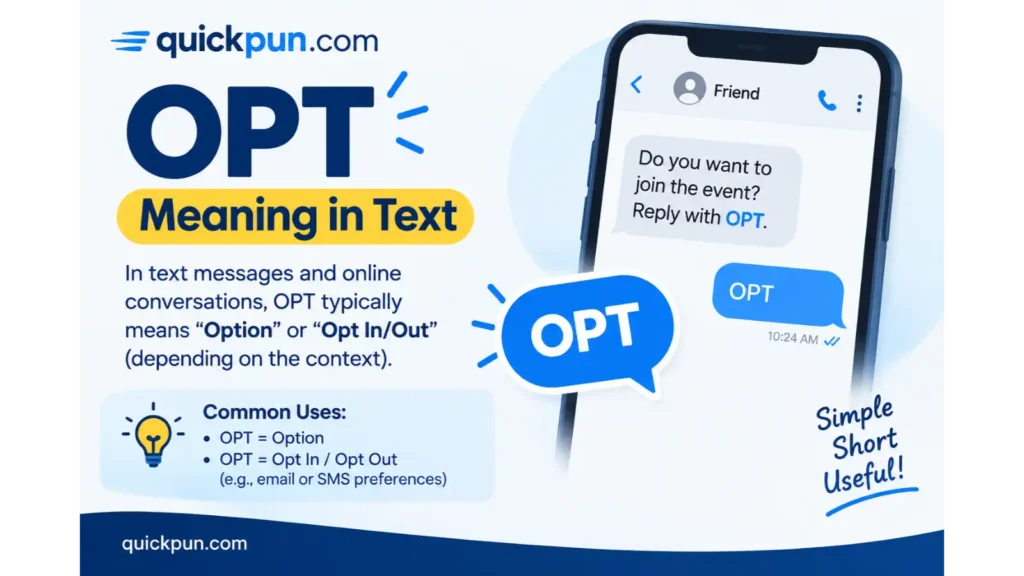
Imagine you are chatting with a friend about a game, a plan, or even a new phone. You send them a message explaining what you think, and they suddenly reply, “OPT for this one.”
You might pause for a second and wonder, “What does OPT mean here?”
That is because OPT can have different meanings depending on the conversation.
In casual texting, it is often connected to the word “opt”, meaning to choose or select something. For example, someone might say, “I’d opt for pizza,” which means they would choose pizza.
However, the exact meaning can change based on the sentence and platform.
Understanding the context is the key to knowing what someone means when they use OPT in a message.
In this guide, we will explain the OPT meaning in text, how people use it in chats and social media, what it can mean from a girl or guy, and when it may sound friendly, neutral, or confusing.
Quick Answer: What Does OPT Mean in Text?
OPT meaning in text usually refers to “choose,” “select,” or “go with an option.” It is commonly used when someone is talking about making a choice between different things.
People may use OPT when:
- They are choosing between two or more options.
- They want to recommend one choice.
- They are discussing plans or decisions.
- They want to keep a message short.
- They are talking about games, shopping, food, travel, or other choices.
- They are using casual internet language.
For example:
“I’d opt for the blue one.”
This means: “I’d choose the blue one.”
What Does OPT Mean in Text?
The most common OPT slang meaning is connected to the normal English verb “opt.”
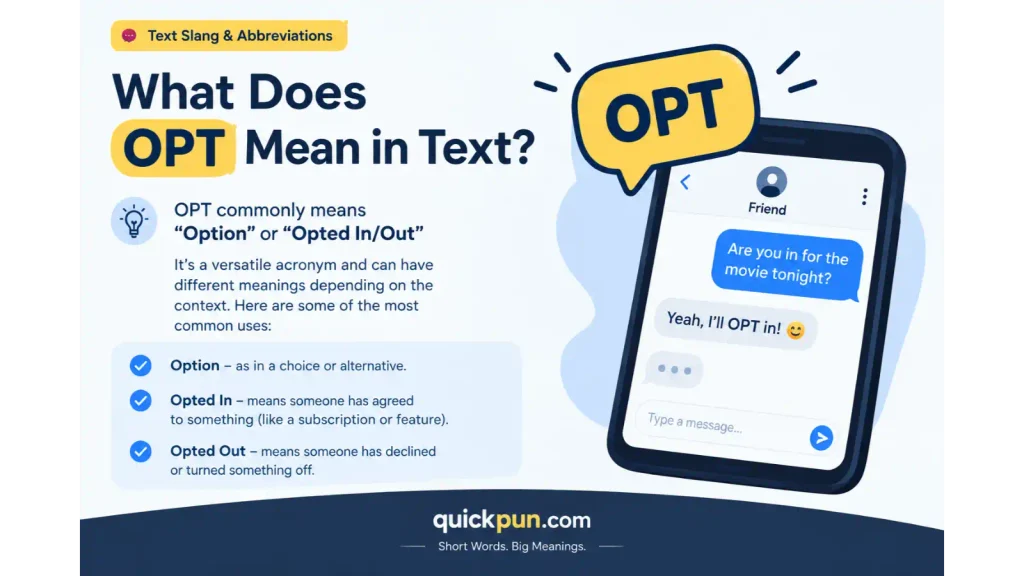
To opt for something means to choose it instead of another option.
For example:
“I’ll opt for the cheaper plan.”
This means:
“I’ll choose the cheaper plan.”
OPT is not always an abbreviation. Sometimes people simply write the word “opt” in lowercase or uppercase because they are talking about making a choice.
Mini Example 1
Person A: Which phone should I buy?
Person B: I’d opt for the newer model.
Here, opt for means choose.
Mini Example 2
Person A: Are you getting pizza or burgers?
Person B: I’ll opt for pizza.
The person is choosing pizza.
Mini Example 3
Person A: Which character should I use?
Person B: Opt for the faster one.
Here, OPT means choose or go with.
So, when someone says OPT in a text message, look at the words around it. The sentence will usually make the meaning clear.
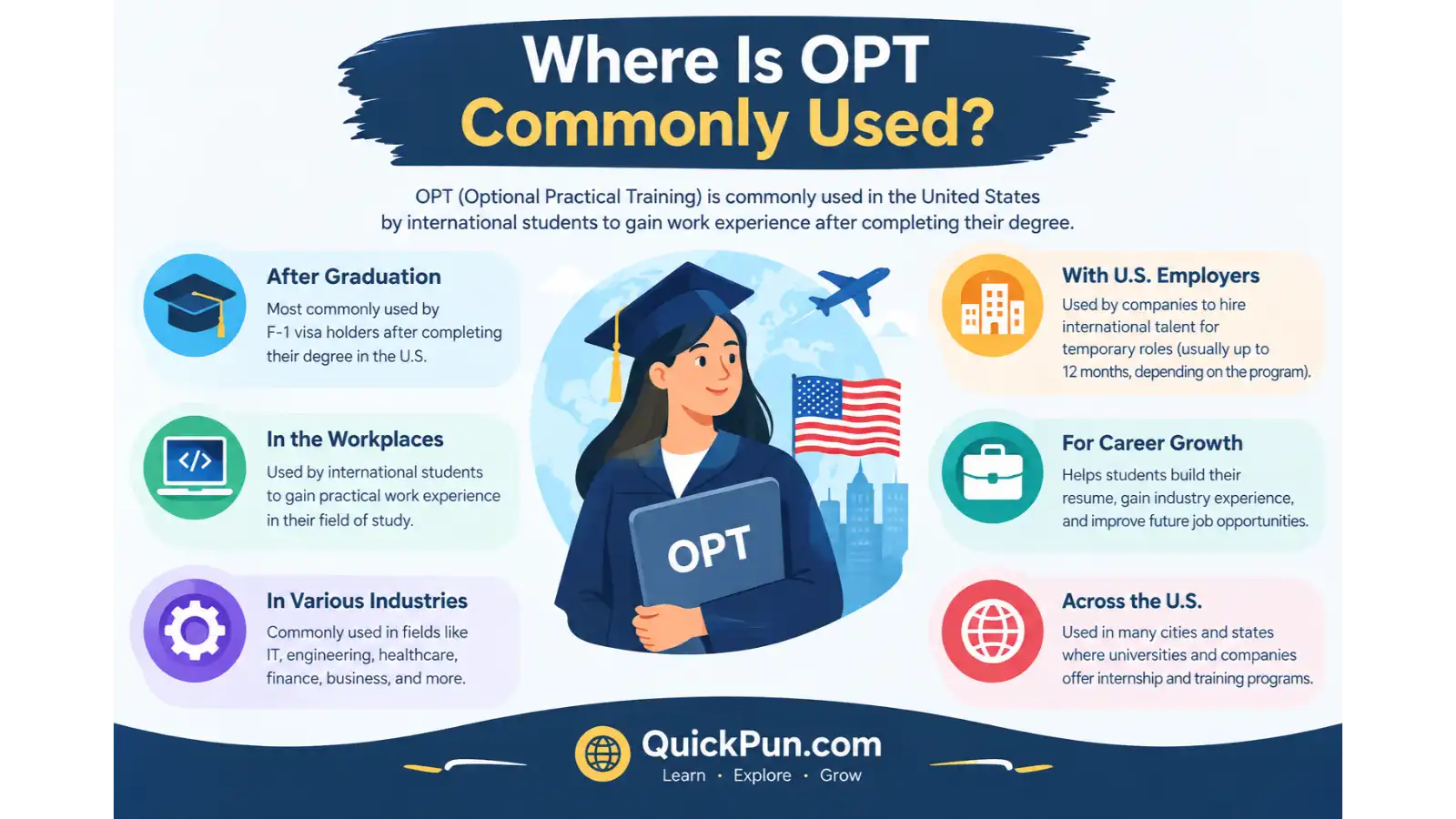
Where Is OPT Commonly Used?
The word OPT can appear across many online platforms. Its meaning is usually based on the topic being discussed rather than the specific app.
Text Messages
In normal texting, OPT can be used when friends discuss choices.
Example:
“If you want my opinion, opt for the black shoes.”
It means the person recommends choosing the black shoes.
On WhatsApp, people may use OPT while discussing plans, food, shopping, or other everyday decisions.
Example:
“We can go by bus or train. I’d opt for the train.”
The sender is saying they prefer the train.
Snapchat
Snapchat conversations are often short and casual, so someone might use OPT when giving quick advice.
Example:
“Opt for the first outfit 🔥”
This means choose the first outfit.
On Instagram, OPT may appear in DMs, comments, captions, or conversations about products and choices.
For example:
“I’d opt for the smaller size.”
The person is recommending the smaller size.
TikTok
TikTok users may use OPT while discussing trends, products, outfits, food, games, or other topics.
For example:
“If you’re trying this trend, opt for the second style.”
The meaning is simply choose the second style.
Gaming / Discord
Gamers can use OPT when discussing characters, weapons, strategies, maps, or upgrades.
For example:
“Opt for the faster build.”
This means choose the faster build.
Tone and Meaning Explained
The tone of OPT depends heavily on the rest of the message. The word itself is usually neutral, but the way someone uses it can make the message feel friendly, direct, or cold.
Friendly Tone 😊
OPT can sound friendly when someone is giving helpful advice.
Example:
“I’d opt for the blue one. It looks better on you 😊”
The person is simply sharing an opinion.
Neutral Tone
In a neutral conversation, OPT simply describes a choice.
Example:
“You can opt for either plan.”
There is no emotional meaning. It just means you can choose either plan.
Rude or Cold Tone
OPT itself is not normally rude. However, a very short message can sometimes feel cold.
Example:
“Just opt for the other one.”
Depending on the relationship and previous conversation, this could sound impatient or dismissive.
The tone comes from the complete sentence, punctuation, and situation—not from OPT alone.
Examples of OPT in Conversation
Here are some realistic examples showing how people might use OPT in everyday chats.
Example 1: Choosing Food
Alex: Pizza or burgers tonight?
Sam: I’d opt for pizza 🍕
Meaning: Sam would choose pizza.
Example 2: Shopping
Mia: Which dress should I buy?
Sara: Opt for the black one. It looks amazing.
Meaning: Sara recommends choosing the black dress.
Example 3: Travel
Tom: Should we take the bus or train?
Jake: I’d opt for the train. It’s faster.
Meaning: Jake prefers the train.
Example 4: Gaming
Player 1: Which character should I pick?
Player 2: Opt for the healer if we’re playing ranked.
Meaning: The second player recommends choosing the healer.
Example 5: School
Sam: Should I take math or computer science?
Alex: I’d opt for computer science.
Meaning: Alex would choose computer science.
Example 6: Outfit
A: Which shoes work better with this outfit?
B: Opt for the white ones 👟
Meaning: Choose the white shoes.
Example 7: Making Plans
A: Movie at home or theater?
B: I’d opt for the theater tonight.
Meaning: The person prefers going to the theater.
OPT Meaning From a Girl
If a girl uses OPT in a conversation, the basic meaning usually does not change. She is most likely talking about choosing something.
For example:
“I’d opt for the first one.”
She probably means:
“I would choose the first one.”
However, the emotional meaning can depend on the situation.
If she is helping you make a decision, OPT may sound supportive:
“Opt for the blue shirt. It suits you better.”
She is giving you advice.
If she sends a very short message such as:
“Just opt for it.”
She may simply be encouraging you to make the choice, although the exact tone depends on the conversation.
It is also important not to assume that OPT has a hidden romantic meaning just because a girl uses it. OPT by itself does not normally indicate flirting, attraction, or romantic interest.
The surrounding messages are much more important.
OPT Meaning From a Guy
When a guy uses OPT, it generally has the same meaning: choose, select, or go with something.

For example:
“Opt for the second one.”
He is telling someone to choose the second option.
A guy might also use it while talking about:
- Games
- Technology
- Cars
- Food
- Clothes
- Travel
- School
- Work
- Plans
For example:
“For gaming, I’d opt for the faster PC.”
This simply means he would choose the faster PC.
Like with a girl, the word OPT does not automatically carry a romantic or secret meaning when used by a guy.
Is OPT Ever Rude or Offensive?
Generally, OPT is not a rude or offensive slang term.
It is a normal English word that can be used casually in messages. Still, the sentence around it can affect how the message feels.
Dry
A short response can sound dry:
“Opt for the first one.”
There is no explanation or extra emotion.
Passive-Aggressive
In certain situations, the phrase could sound passive-aggressive:
“If you don’t like it, just opt for something else.”
The issue is not the word OPT itself. The attitude comes from the full statement and the situation.
Polite
OPT can also appear in polite and helpful advice:
“You may want to opt for the earlier appointment.”
That sounds professional and respectful.
So, if someone uses OPT with you, don’t automatically assume they are being rude. Look at the complete conversation before deciding what their tone means.
When to Use and When NOT to Use OPT
| When to use ✅ | When NOT to use ❌ |
|---|---|
| When discussing choices | When the person may not understand the word |
| When recommending an option | In very formal writing unless appropriate |
| In casual conversations | When a simple “choose” would be clearer |
| When talking about plans | When the context does not involve a choice |
| In gaming discussions | When using unexplained slang with someone unfamiliar with it |
| In social media chats | When the sentence could become confusing |
For example, saying “Opt for the blue one” works well in casual conversation.
But if you are speaking to someone learning English, “Choose the blue one” may be easier to understand.
OPT Meaning in Chat vs Social Media
The meaning of OPT usually stays the same in chats and social media, but the way people use it can be different.
OPT in Chat
In private chats, people commonly use OPT while discussing a specific decision.
For example:
“I’d opt for the first restaurant.”
The context is personal and direct.
OPT on Social Media
On social media, OPT may appear in comments, captions, or DMs.
For example:
“Opt for the second look 🔥”
A person may be giving quick advice about an outfit or trend.
Social media messages often contain fewer words, so the context can sometimes be less obvious.
If you see OPT in a post or comment and are unsure what it means, read the sentence before and after it. The surrounding content usually reveals the intended meaning.
Similar Slang Words or Alternatives
If someone uses OPT while talking about a choice, several other words can communicate a similar idea.
| Word | Meaning | Usage |
|---|---|---|
| Choose | Pick something | “Choose the blue one.” |
| Pick | Select something | “Pick whichever you like.” |
| Go with | Choose an option | “I’d go with the first one.” |
| Select | Choose from options | “Select your preferred option.” |
| Decide | Make a choice | “I need to decide today.” |
| Prefer | Like one option more | “I prefer the second one.” |
| Take | Choose or accept something | “I’ll take the cheaper one.” |
| Favor | Prefer one choice | “I favor the first option.” |
In casual texting, “go with” and “pick” can often sound more natural than OPT.
For example:
“I’d go with the black one.”
has almost the same meaning as:
“I’d opt for the black one.”
Other Meanings of OPT
Although opt commonly means choose, the abbreviation OPT can have other meanings in different contexts.
One well-known meaning is Optional Practical Training, especially in discussions about international students and employment in the United States.
For example, someone discussing education or immigration might say:
“I’m applying for OPT after graduation.”
In that context, OPT does not mean simply “choose.”
There can also be technical or industry-specific meanings of OPT. The correct interpretation depends on the subject of the conversation.
This is why context is extremely important.
If you see:
“I’d opt for the cheaper one.”
OPT clearly relates to choosing.
But if you see:
“My OPT starts next month.”
you need more context to understand what the abbreviation refers to.
Why Do People Use OPT?
There are several reasons people use OPT in conversations.
Fast Typing
Online conversations move quickly. People often prefer short and simple words.
Using:
“Opt for this one.”
is quick and direct.
Internet Culture
Modern online communication mixes everyday English with shortened expressions and casual language.
Words such as opt, pick, go with, and choose appear frequently when people discuss decisions online.
Convenience
OPT can make a recommendation sound short and direct.
Instead of saying:
“I think you should choose the second option because it may be better for your situation.”
someone might simply say:
“I’d opt for the second one.”
The shorter sentence still communicates the main idea.
Giving Advice
People often use OPT when they want to recommend something without sounding overly forceful.
For example:
“I’d opt for the cheaper plan.”
This presents a preference rather than an absolute command.
Talking About Options
The word naturally fits conversations where several choices are available.
Whether people are discussing food, clothes, games, travel, or school, OPT can describe the decision they would make.
FAQs:
What does OPT mean in text?
OPT usually means “choose” or “select” when used in casual text conversations. For example, “Opt for the blue one” means “Choose the blue one.”
Is OPT slang?
OPT can be considered casual language in texting, but “opt” is also a standard English word. It means to choose or decide in favor of something.
What does OPT mean in chat?
The OPT meaning in chat is usually related to making a choice. Someone may say “I’d opt for this one” to explain which option they prefer.
What does “opt for” mean?
“Opt for” means “choose” or “decide to have.”
For example:
“I’ll opt for the cheaper option.”
This means:
“I’ll choose the cheaper option.”
Does OPT mean something romantic from a girl?
Not normally. OPT does not have a standard romantic meaning from a girl. If a girl says “opt for this one,” she is most likely recommending a choice. The broader conversation is needed to understand any emotional meaning.
Can OPT be rude?
OPT itself is not usually rude or offensive. However, a short sentence such as “Just opt for something else” can sound cold or impatient depending on the situation.
Final Thoughts:
Understanding OPT meaning in text is actually pretty simple once you look at the context.
In most casual conversations, opt means to choose, select, or go with an option. You may see it when someone is talking about food, clothes, games, travel, school, shopping, or everyday decisions.
The word itself is normally neutral and is not automatically rude, romantic, or offensive. The tone comes from the complete message and the relationship between the people chatting.
So, if someone texts you:
“I’d opt for the first one.”
they are simply saying:
“I’d choose the first one.”
When you understand the surrounding conversation, the OPT slang meaning becomes much easier to recognize. 💬

Peter Hemsworth is the mind behind QuickPun.com, where everyday words, slang, and internet expressions reveal their hidden stories. With a passion for uncovering what people really mean, he turns simple terms into fascinating reads that keep curious minds coming back for more. Dive in—you might discover there’s far more behind a word than you ever imagined.